















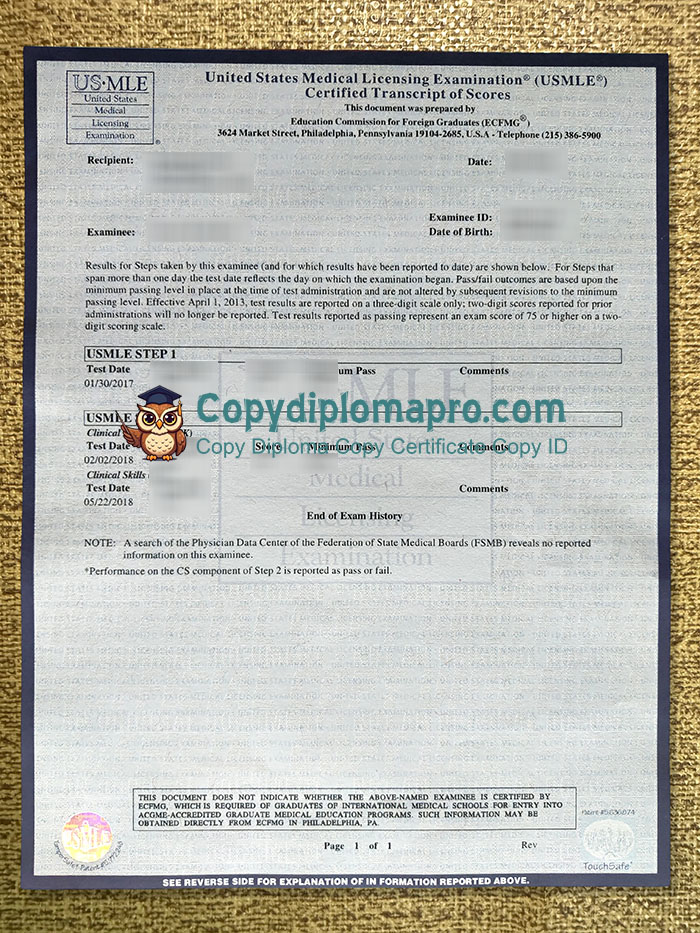
The Smart Tips to Get United States Medical Licensing Examination Certificate, USMLE Certificate, The United States Medical Licensing Examination (USMLE) is a comprehensive examination system designed to assess the knowledge, skills, and professional abilities required to practice medicine safely in the United States. It is an important part of the medical licensing pathway for physicians who want to pursue medical practice and postgraduate training in the United States.
The USMLE is particularly important for both graduates of U.S. medical schools and International Medical Graduates (IMGs) who plan to enter the American healthcare system. Rather than being a single examination, the USMLE consists of several steps that evaluate different aspects of medical knowledge and clinical competence.
For medical students and international doctors, understanding the USMLE structure, eligibility requirements, examination process, and relationship to medical licensure is an important part of planning a medical career in the United States. Get Certified Health Facility Manager Certificate.

What Is the United States Medical Licensing Examination?
The United States Medical Licensing Examination, commonly known as the USMLE, is a multi-step examination program used as part of the U.S. medical licensing process.
The examination evaluates whether candidates have the medical knowledge and clinical skills necessary to provide patient care. Its content develops progressively from fundamental scientific concepts to clinical decision-making and the practical application of medical knowledge.
The USMLE is associated with the Federation of State Medical Boards (FSMB) and the National Board of Medical Examiners (NBME). Different organizations are involved in administering examinations and supporting the pathway for different categories of medical graduates.
Passing the required USMLE examinations is an important component of the licensing pathway, but it does not by itself guarantee a medical license. Medical licensure is ultimately governed by individual state medical boards, and applicants must satisfy additional state-specific requirements.