







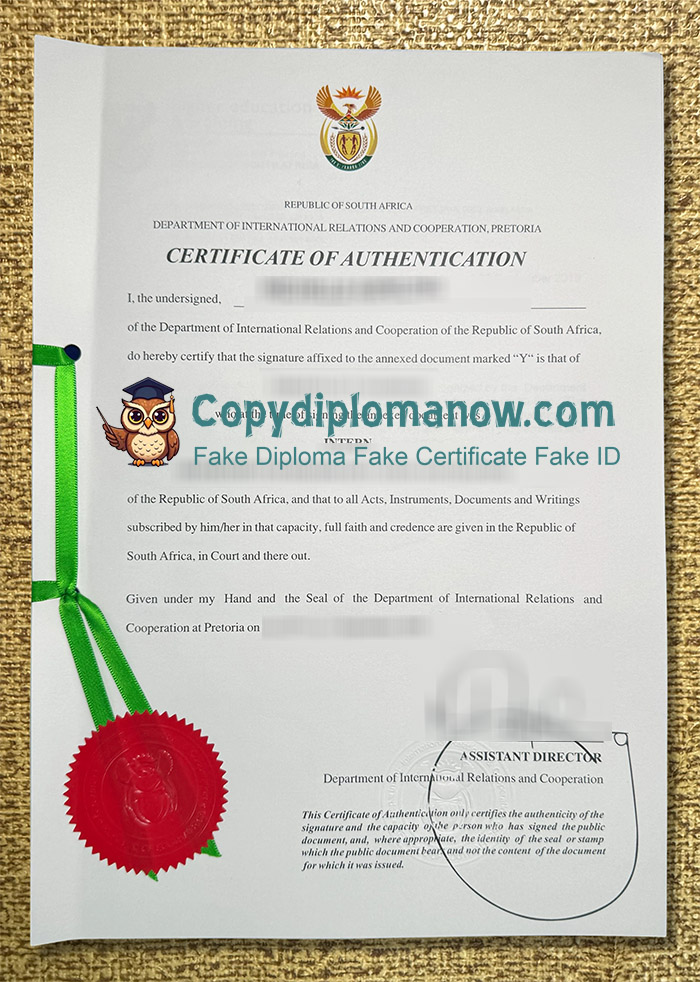
How to quickly get a South Africa Certificate Authentication, South African certification, In an increasingly globalized world, the need for verified and legally recognized documents has become essential. Whether for education, employment, business, or immigration, individuals and organizations often need to present official documents across borders. One critical process that ensures the credibility and acceptance of such documents is South Africa certificate authentication. This article explores what certificate authentication is, how it works in South Africa, and the key benefits it offers. Get University of Pretoria Diploma.
What Is Certificate Authentication?
Certificate authentication is the process of verifying the legitimacy of a document so that it is recognized as valid by foreign governments, institutions, or organizations. In South Africa, this typically involves confirming that a document—such as a birth certificate, academic diploma, marriage certificate, or police clearance—is genuine and issued by the appropriate authority.
The process may include notarization, verification by relevant government departments, and legalization through diplomatic channels. For countries that are members of the Hague Convention, authentication may be simplified through an apostille certificate.
Key Benefits of South Africa Certificate Authentication
- International Recognition
One of the most significant advantages of certificate authentication is that it allows documents issued in South Africa to be legally recognized abroad. This is especially important for individuals planning to study, work, or live in another country. Without authentication, foreign authorities may reject documents due to concerns about their validity.
- Facilitates Education Opportunities
Students who wish to pursue higher education overseas must often submit authenticated academic records and diplomas. Authentication ensures that universities and educational institutions can trust the legitimacy of these documents, making the admissions process smoother and more efficient.
- Enhances Employment Prospects
For professionals seeking employment outside South Africa, authenticated documents are often a mandatory requirement. Employers need assurance that qualifications, certifications, and background checks are genuine. Certificate authentication builds this trust and improves the chances of securing international job opportunities.
- Supports Immigration and Visa Applications
Immigration authorities typically require authenticated documents as part of visa applications. Birth certificates, marriage certificates, and police clearances must be verified to prevent fraud and ensure compliance with legal standards. Proper authentication reduces delays and increases the likelihood of approval.
- Enables International Business Transactions
Businesses expanding into foreign markets or engaging in international partnerships must present authenticated corporate documents. These may include company registration certificates, contracts, and financial statements. Authentication ensures that these documents are accepted by foreign regulators and partners, facilitating smoother transactions.
- Prevents Fraud and Misrepresentation
Certificate authentication acts as a safeguard against document fraud. By verifying the authenticity of documents through official channels, it becomes significantly harder for individuals or organizations to use forged or altered records. This contributes to maintaining trust in international systems.
- Saves Time and Reduces Complications
Although the authentication process may seem complex, it ultimately saves time by preventing issues later. Properly authenticated documents are less likely to be rejected, which reduces the need for resubmission, additional verification, or legal disputes.