










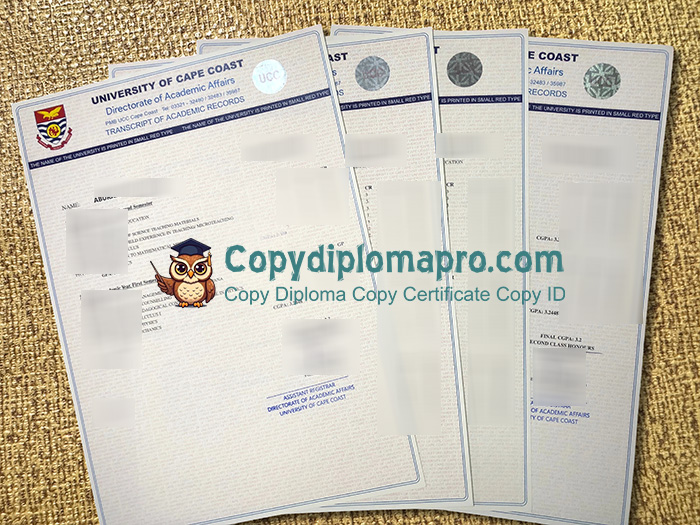
Simple steps to get University of Cape Coast Transcript, UCC Transcript, The University of Cape Coast (UCC) was established in October, 1962 as a University College and placed in a special relationship with the University of Ghana, Legon. On October 1, 1971, the College attained the status of a full and independent University, with the authority to confer its own degrees, diplomas and certificates by an Act of Parliament – The University of Cape Coast Act, 1971 [Act 390] and subsequently the University of Cape Coast Law, 1992 [PNDC Law 278]. The University was established out of a dire need for highly qualified and skilled manpower in education. Its original mandate was therefore to train graduate professional teachers for Ghana’s second cycle institutions and the Ministry of Education in order to meet the manpower needs of the country’s accelerated education programme at the time. Today, with the expansion of some of its Faculties/Schools and the diversification of programmes, the University has the capacity to meet the manpower needs of other ministries and industries in the country, besides that of the Ministry of Education.
The University of Cape Coast is deeply committed to sustainability as a core institutional value, embedding it across research, teaching, campus life, and community engagement. Its research agenda is deliberately aligned with the UN’s Sustainable Development Goals (SDGs) through transdisciplinary work across environment, governance, health, technology, and social transformation (see UCC SDG Report 2023) . In teaching, specialized departments like Environment, Governance & Sustainable Development and the School of Sustainable Engineering infuse sustainability into curricula and learning experiences. On campus, sustainability principles guide infrastructure, land use, and resource practices (e.g. past assessments of energy and land-use impacts). Beyond the campus, UCC engages with local communities and global partners in applied projects, outreach, and collaborative research to promote sustainable development. Together, these efforts reflect UCC’s vision to help shape a resilient, equitable and sustainable future for Ghana and beyond. Order University of Cape Coast Diploma.

Is an Advanced Degree Worth the Work Required?
It’s important to ask yourself: Is it worth it to pursue a master’s degree? In addition to job security, master’s degrees offer other benefits. You become more qualified for certain kinds of jobs, increasing your job security, especially during recessions. A Master’s degree can also get you a better salary than a Bachelor’s degree alone.
Earning a master’s degree is a major investment in your future. It requires significant amounts of work and research, and most universities require that applicants hold a master’s degree before applying for a PhD. However, if you’re not planning on pursuing a PhD, it might not be worth the effort. And if you’re not sure if you’re up for it, consider what barriers may be present in your chosen field.
After you’ve decided that a master’s degree is right for you, identify a career that you’d like to pursue. You can ask current workers what master’s degree programs they’ve taken. If you’re unsure, you can use your network to find opportunities. You can also contact the alumni career center of your undergraduate school. In some professions, there are workers who are willing to mentor others.
Despite its benefits, a master’s degree can be expensive. The median net tuition for master’s programs costs $11,000. Depending on the field of study, some can cost as much as $29,000. Public universities typically have net tuition prices based on prices for state residents. While these figures include the cost of tuition and other required fees, they do not include living expenses.